
4 tax traps that could stop your wealth from growing
Today, even those with plenty of money can still feel as if they’re spinning their wheels.
There are several reasons for this – one of which is that Income Tax thresholds have been frozen since 2021 and are currently expected to remain unchanged until at least 2031.
As earnings rise over time, many people are moving into higher Income Tax brackets. The Office for Budget Responsibility forecasts that 4.8 million more people will move into the higher-rate tax bracket between 2022/23 and 2030/31, while additional-rate taxpayers will rise by 600,000.
But it’s not only Income Tax you need to think about. Moving up an Income Tax band could trigger higher tax bills in other areas, while frozen tax-efficient allowances could see a larger portion of your wealth subject to tax.
But by taking steps to dodge the various tax traps that frozen thresholds and allowances can set, you could help retain and pass on more of your wealth.
Here are four tax traps to be aware of and how you may be able to avoid them.
1. The 60% tax trap for six-figure income
You may be aware of the Income Tax thresholds and rates for the higher- and additional-rate bands. But the “60% tax trap” is perhaps less well known.
Once your annual earnings exceed £100,000, your Personal Allowance begins to decrease. This is the amount most people can earn each year before paying tax, and it’s frozen at £12,570 as of September 2026.
For every £2 you earn over the £100,000 threshold, you lose £1 of your Personal Allowance. Your Personal Allowance disappears once your earnings reach £125,140, at which point you become an additional-rate taxpayer.
This effectively means earnings between £100,000 and £125,140 are exposed to 60% Income Tax.
For example, if you earn £110,000 in a tax year, your Personal Allowance will normally be reduced by £5,000. This £5,000 is taxed at 40% (£2,000), as is the £10,000 over the threshold (£4,000). So, you pay £6,000 Income Tax on £10,000 of income.
Top tip: Your ownpension contributions are normally deducted from your adjusted net income. In some cases, paying more into your pension could help you avoid falling into the 60% tax trap. Not only might you retain your full Personal Allowance, but you might also receive tax relief on your contributions – helping you keep more of your earnings.
2. The savings tax trap for higher earners
The higher your Income Tax bracket, the more likely it is that your savings interest will be eroded by tax.
There is an allowance, called the Personal Savings Allowance (PSA), that means some people can earn interest on savings tax-free. The PSA decreases as you move into a higher tax bracket.
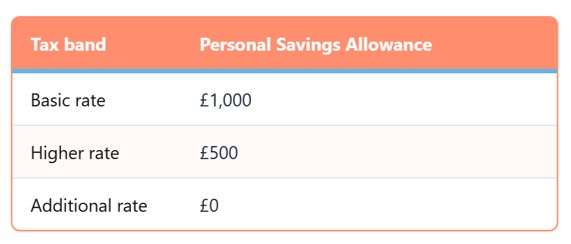
Not only does this mean that your interest earnings may be taxed, but they could also be taxed at a higher rate. What’s more, the Income Tax rates for savings interest are set to rise by two percentage points from April 2027.
So, as you grow your income and wealth, you may find your savings tax bill rises.
Top tip: In 2026/27, Cash ISAs allow you to save up to £20,000 a year without being taxed on interest earnings. This allowance is shared across all adult ISAs. By using your full allowance before building your non-ISA savings, you may be able to mitigate your interest tax bill.
It’s important to note that the Cash ISA allowance will effectively reduce to £12,000 a year from April 2027 for under-65s. You will still be able to use the full £20,000 allowance if at least £8,000 is invested in a Stocks and Shares ISA or Innovative Finance ISA.
3. The Capital Gains Tax and Dividend Tax traps
Income Tax isn’t the only bill that goes up as your income rises. Moving into a higher Income Tax bracket could also mean you’re subject to a higher rate of Capital Gains Tax (CGT) and Dividend Tax.
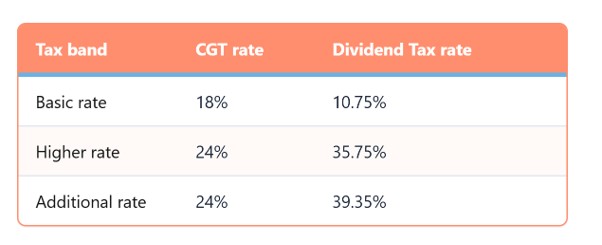
These rates have risen in recent years, meaning your respective tax bills may be growing regardless of whether your income has increased.
What’s more, the tax-efficient allowances for both CGT and Dividend Tax have reduced significantly in the past few years:
- Annual Exempt Amount: The amount of capital gains individuals can make before paying CGT has fallen from £12,300 in 2022/23 to just £3,000 in 2026/27.
- Dividend Allowance: In 2016/17, you could earn £5,000 a year in dividends tax-efficiently. As of 2026/27, this allowance is 90% lower at just £500.
Ultimately, this means that a larger portion of your capital gains and dividends may be taxed, while you also become subject to higher rates.
Top tip: Investing in a Stocks and Shares ISA, Innovative Finance ISA, or pension could help mitigate tax on your investments or dividend earnings.
In the case of CGT, you might consider planning your asset disposals carefully to make the most of your Annual Exempt Amount. Any unused allowances cannot be carried forward into the next tax year, but by spreading sales across multiple years you may be able to mitigate your CGT bill.
4. The £2 million Inheritance Tax trap
Some of your assets have likely gone up in value over recent years, such as your home, pensions, and investments. While this is great news, it could mean you get caught in the £2 million Inheritance Tax (IHT) trap as your tax-efficient allowance reduces.
IHT is complicated, so here’s a quick breakdown of how it works:
- As of 2026/27, 40% IHT is normally charged on the portion of your estate exceeding your nil-rate band.
- The standard nil-rate band is frozen at £325,000 until 2031, but your estate may also benefit from the residence nil-rate band (£175,000 – also frozen until 2031). This increases your tax-efficient allowance to up to £500,000 if you leave a primary residence to a direct descendant.
- The residence nil-rate band begins to taper once your net estate passes £2 million. For every £2 your estate exceeds the threshold, you lose £1 of your residence nil-rate band.
- You lose your entire residence nil-rate band once your estate’s value reaches £2.35 million (if entitled to one residence nil-rate band, or £2.7 million if entitled to two).
You may not think your estate is large enough to pass the £2 million threshold. But with asset values rising and pensions set to be included in IHT calculations from April 2027, you could be closer to losing your residence nil-rate band than you think.
Top tip: Gifting your wealth to loved ones during your lifetime could help reduce the size of your estate and retain more of your tax-efficient allowance. The rules for tax-efficient gifting can be complex, so read our recent blog to explore 5 costly gifting mistakes and how to avoid an accidental Inheritance Tax charge.
But gifting isn’t the only way you could mitigate your estate’s IHT liability. Find out more: Not ready to gift? 5 alternative Inheritance Tax strategies.
Get in touch
If you’re worried about how frozen thresholds and allowances could affect your tax bills, we could support you in creating a tailored plan to help you keep more of your wealth.
Email info@chancellorfinancial.co.uk, or call 01204 526 846 to speak to an adviser.
If you’re already a client here at Chancellor, contact your personal financial adviser to discuss any of the content you’ve read in this article.
Please note
This article is for general information only and does not constitute advice. The information is aimed at individuals only.
All information is correct at the time of writing and is subject to change in the future.
Please do not act based on anything you might read in this article. All contents are based on our understanding of HMRC legislation, which is subject to change.
The Financial Conduct Authority does not regulate estate planning or tax planning.
A pension is a long-term investment not normally accessible until 55 (57 from April 2028). The fund value may fluctuate and can go down, which would have an impact on the level of pension benefits available. Past performance is not a reliable indicator of future performance.
The tax implications of pension withdrawals will be based on your individual circumstances. Thresholds, percentage rates, and tax legislation may change in subsequent Finance Acts.
The value of your investments (and any income from them) can go down as well as up and you may not get back the full amount you invested. Past performance is not a reliable indicator of future performance.
Investments should be considered over the longer term and should fit in with your overall attitude to risk and financial circumstances.